When Buyers Ask AI Who To Hire In Your Category, Your Name Should Be In The Answer.
Right now, it's naming someone else. This is the system that got one no-name niche site named 162,500 times, 112,500 of them in the last three months. Not luck. Not authority. Not a following.
162,500 Microsoft Copilot citations · 160+ pages cited
AI didn't replace word of mouth. It became word of mouth.
The only question is whether your business is one of the names it passes around.
Malik here.
Every minute, AI engines are answering questions for your potential buyers:
“What's the best project management software for small agencies?”
“Top wedding photographers in Toronto?”
“Best landscape photography prints under $100?”
“Which gluten-free baking blog should I trust?”
“Best business coaches for solopreneurs?”
The AI gives an answer. And that answer names specific businesses by name.
For ten years, the place to “show up” was Google's first page. Now buyers skip the search results entirely. They ask AI, the AI names a few sources, and that's the conversation. The buyer reads the names, decides who to check out, and clicks through to one — unless you're on the list, it isn't you.
Right now, almost nobody is positioned to be one of the names AI picks.
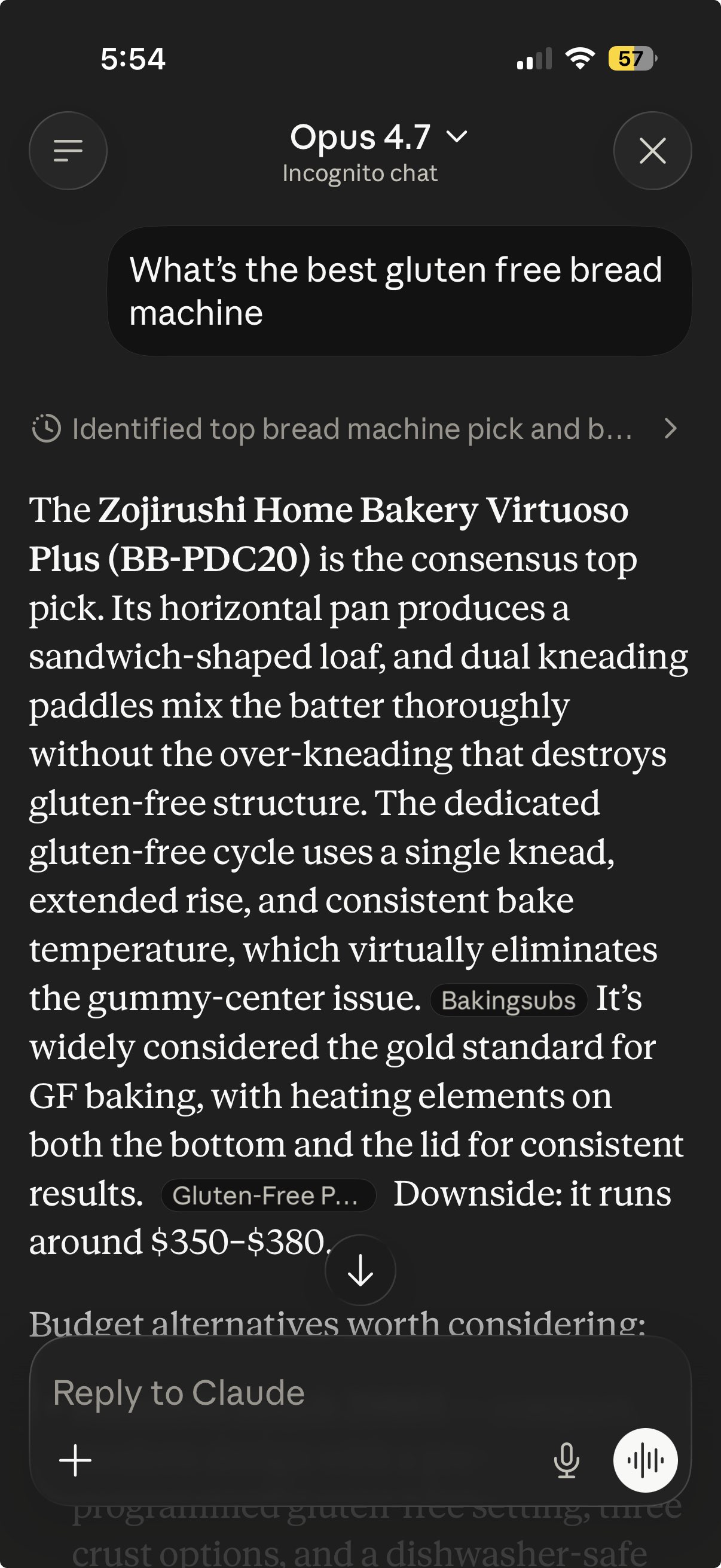
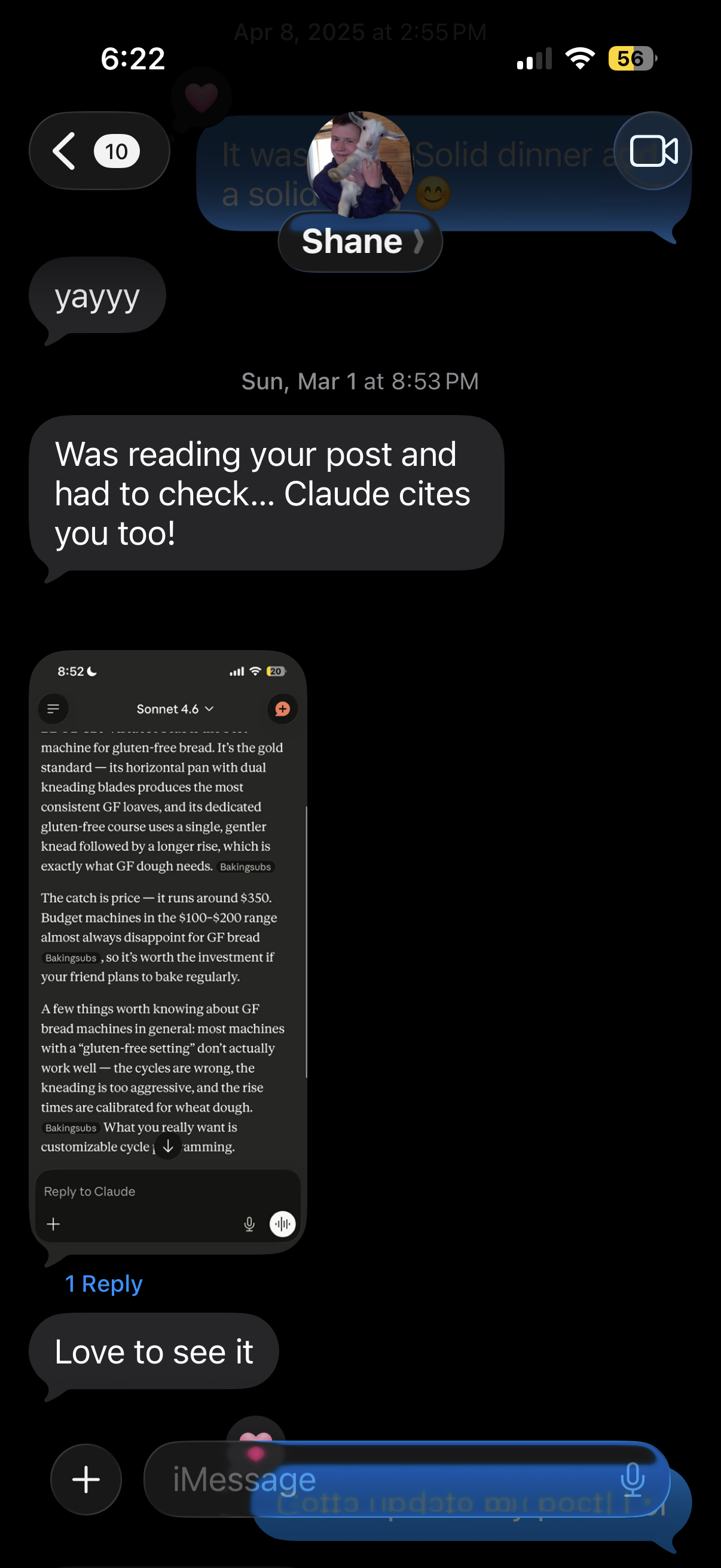
Claude, asked a real buyer question, citing BakingSubs by name.
Word of mouth reputation used to take years to build. Now it builds in months, especially for the business owners who position for it correctly.
Every year, AI engines update their training data with the latest information they can find. That means that names AI passes around today will own their categories for the next ten years.
I know because I already did it. I built this system on a niche I had no background in. No audience, no expertise, and no following.
If you have something to sell, I'm going to show you how to build this same system too.
How a niche site with no audience became one of the names AI keeps passing around, 162,500 times and counting.
A year ago my partner Maddy and I had just started BakingSubs, a small business teaching gluten-free baking. We had no audience, no following, and no idea this would happen.
Since then, AI engines have cited our pages 162,500 times. Two-thirds of that, 112,500 citations, came in just the last three months.
This is the system that did it.
It started with a bet I knew would make zero dollars for at least six months.
Instead of writing blog posts one at a time based on what I thought my customers cared about, I went looking for the questions home bakers were typing into Google at 2am. The specific problems that already had buyers behind them but didn't have good answers yet.
Through some research, I found about 80 of them, and built 10 small groups of pages around them. Each group had one main page and seven helper pages that answered specific questions inside that topic. They were heavily assisted with AI, and required no team, which let me launch them all in just a few weeks.
That structure, small clusters of pages each built to answer one real buyer question, is the whole game. I call it the Citation Cluster Method.
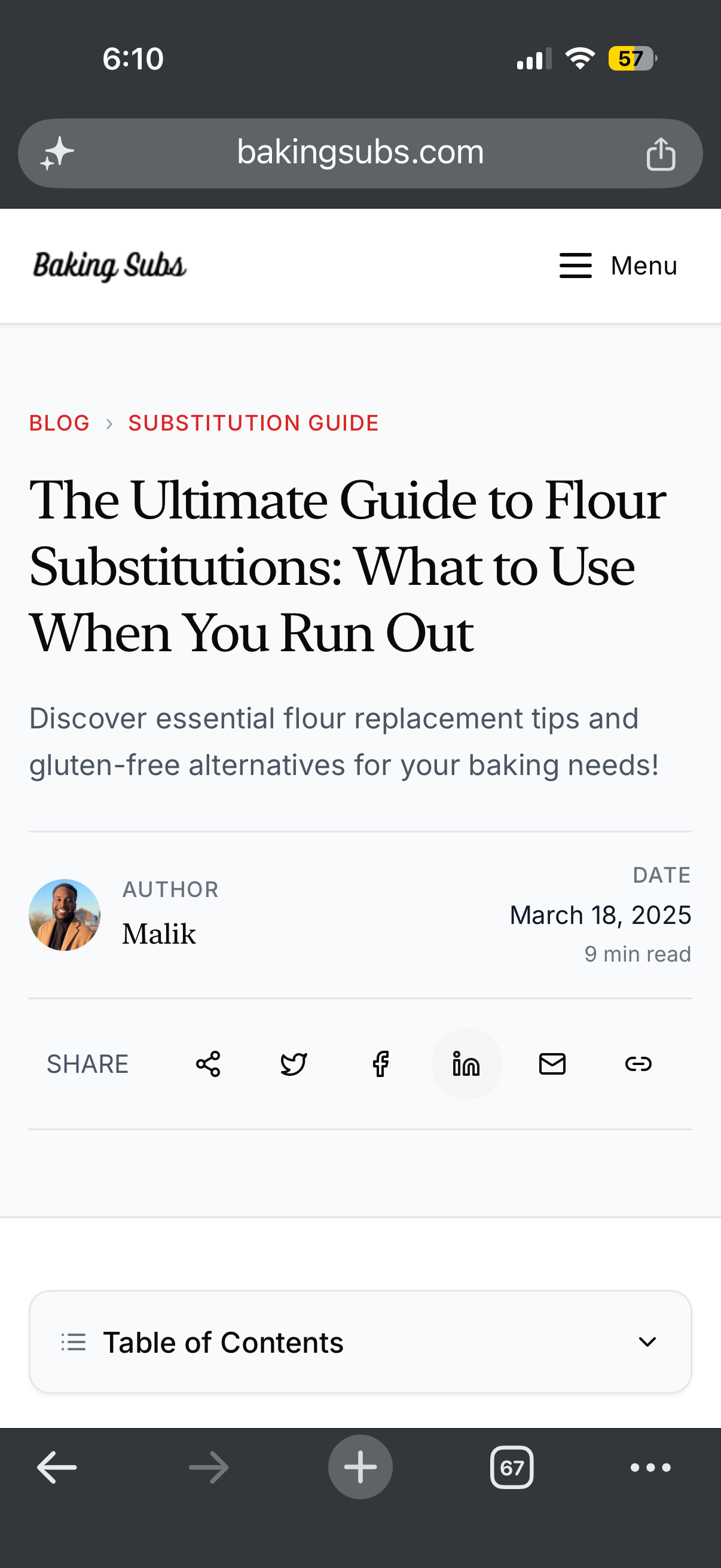
One of the helper pages, built to answer one specific question the moment someone searches it.
Here's what nobody tells you: the two channels run on completely different clocks.
The big wave of Google traffic took about seven months to hit. For the first five, every morning I checked and saw a few clicks, maybe a thousand people who scrolled past without stopping, 80 pages almost nobody was finding. That slow stretch is the whole moat. It's where almost everyone quits, which is exactly why so few businesses are positioned when it finally breaks.
But the AI engines moved much faster. Within weeks of putting this structure live, I could watch Microsoft Copilot and Claude crawling the pages and starting to test our name in their answers. The search traffic is the lagging indicator. The AI citations start early, which is exactly why you want to know the moment you begin getting picked up.
Then, in month seven, the Google side hit too, and it hit hard.
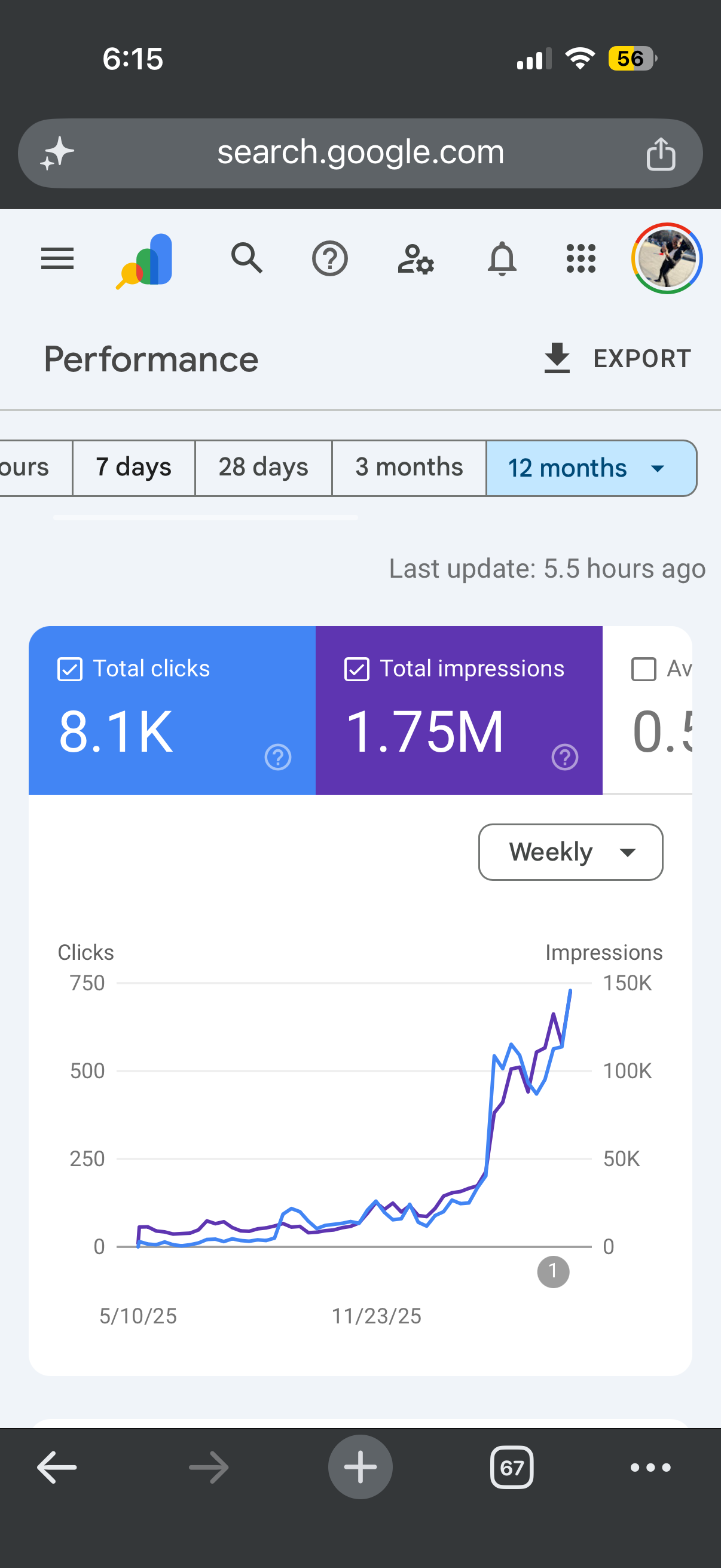
The pages started getting found. Not one or two, dozens at a time. Daily search traffic went from 1,000 to 2,000 views to 4,000 to 5,000. We hit 7,000 in a single day.
Daily clicks, month by month. The ramp came in month seven.
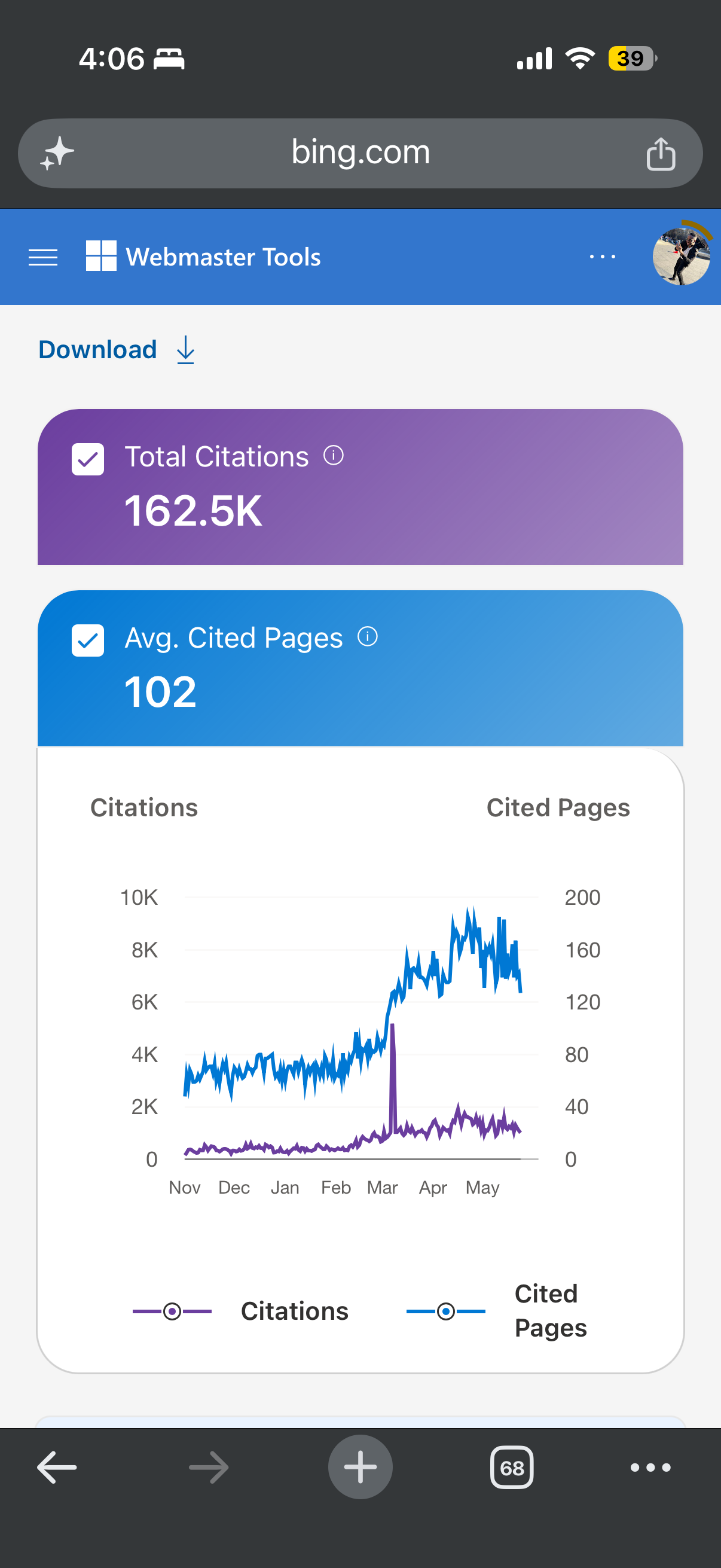
And the Google traffic wasn't even the bigger story. The same system was teaching AI engines to recommend us by name. When I checked Microsoft Copilot's dashboard, I was surprised to see it had cited my pages 162,500 times across 160+ different pages, with 112,500 of those in just the last three months alone. Not one viral page getting lucky. The whole system getting recognized, not just by Google, but by an entirely different discovery layer.
And that's only Microsoft Copilot, the one engine that gives me a dashboard. ChatGPT and Claude are doing the same thing. I just can't measure it directly.
Microsoft Copilot's AI performance dashboard, 162,500 citations across 160+ cited pages and still accelerating.
Then, friends started sending me screenshots of Claude and ChatGPT recommending BakingSubs to them unprompted without me asking. That's when I knew I was onto something.
One of my friend's screenshots, Claude recommending the site by name.
And the citations were only half of it.
The same pages teaching AI engines to recommend us were also pulling in steady search traffic from people typing those same questions into Google. Two discovery channels feeding the same site.
People landed, looked around, got our lead magnets, and eventually bought our stuff. Our list even grew to 1,745 subscribers, all from strangers who found us through one channel or the other and decided to stick around.
1,745 subscribers from strangers AI and Google sent our way.
The new lane wasn't a theory anymore. I was already in it.
And I want to give you the playbook that lets you skip to the part where I figured out what works.
Six months from now, a buyer in your category opens ChatGPT and asks it the same question your best customer asks right before they buy:
“Who's actually the best at this for someone like me?”
The answer names a few businesses. This time, one of them is you.
You didn't post that day. You didn't run an ad. You weren't even at your desk. A page you published months ago did the work, quietly, the way it had every day since you launched it.
Some buyers click straight through from the answer. Most do what people have always done with a recommendation they trust: they remember the name, they look you up, and they come back ready. The same way they would if a friend had mentioned you.
That is the whole game. Being the name AI hands over at the moment someone is deciding who to buy from, before your competitors even know the conversation is happening.
And it compounds. Every page you add is one more answer working for you around the clock, while you get back to running the rest of your business.
The only thing standing between you and that is knowing exactly how to build those pages.
What's Included
Here's everything you get today.
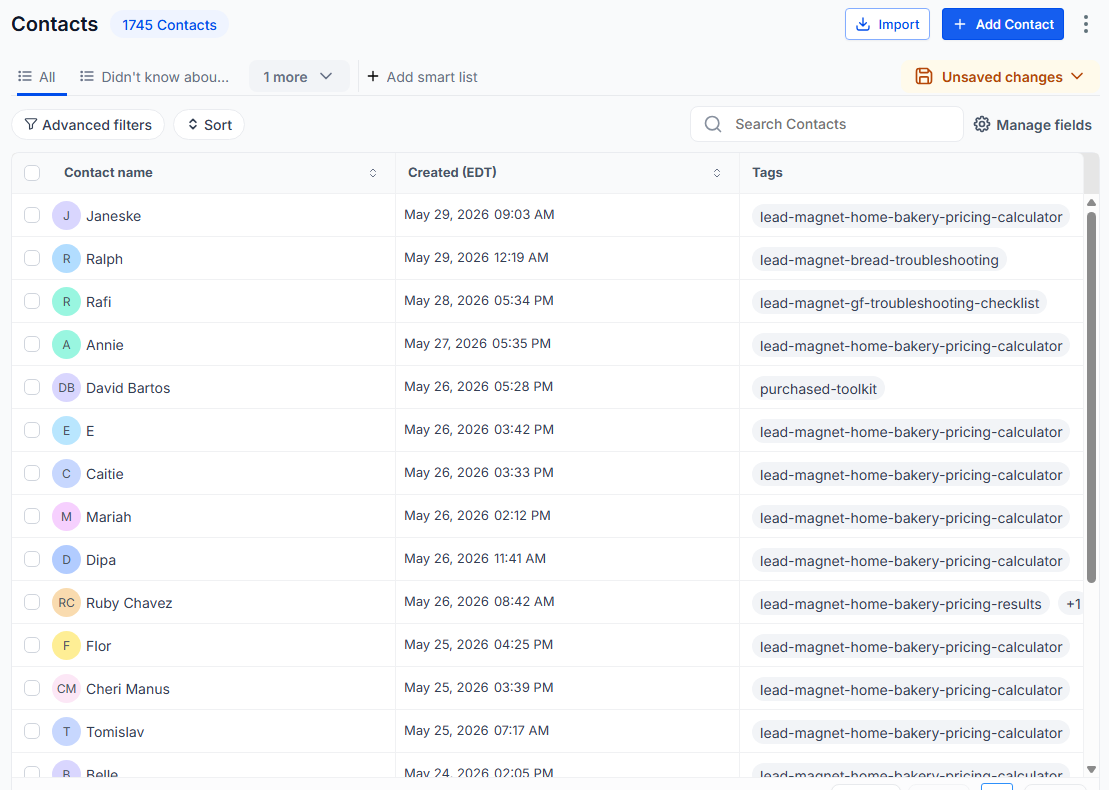
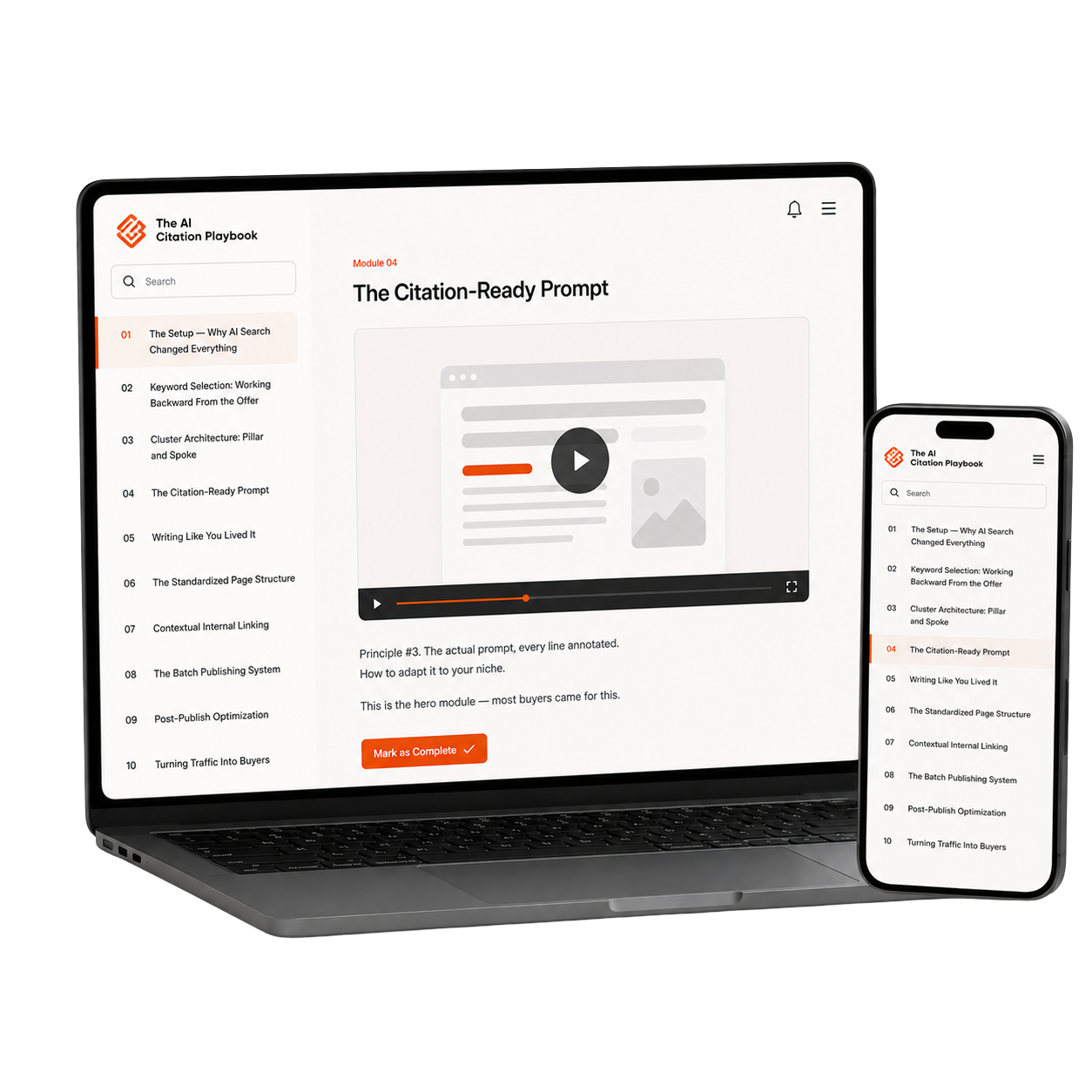
The AI Citation Playbook
The full method, broken into modules: the page structure, the cluster shape, the linking pattern, the schema that labels your answer for the machines. No theory, no filler. You finish knowing exactly which pages to build and how to shape each one, so you never stare at a blank screen wondering if you're doing it right.
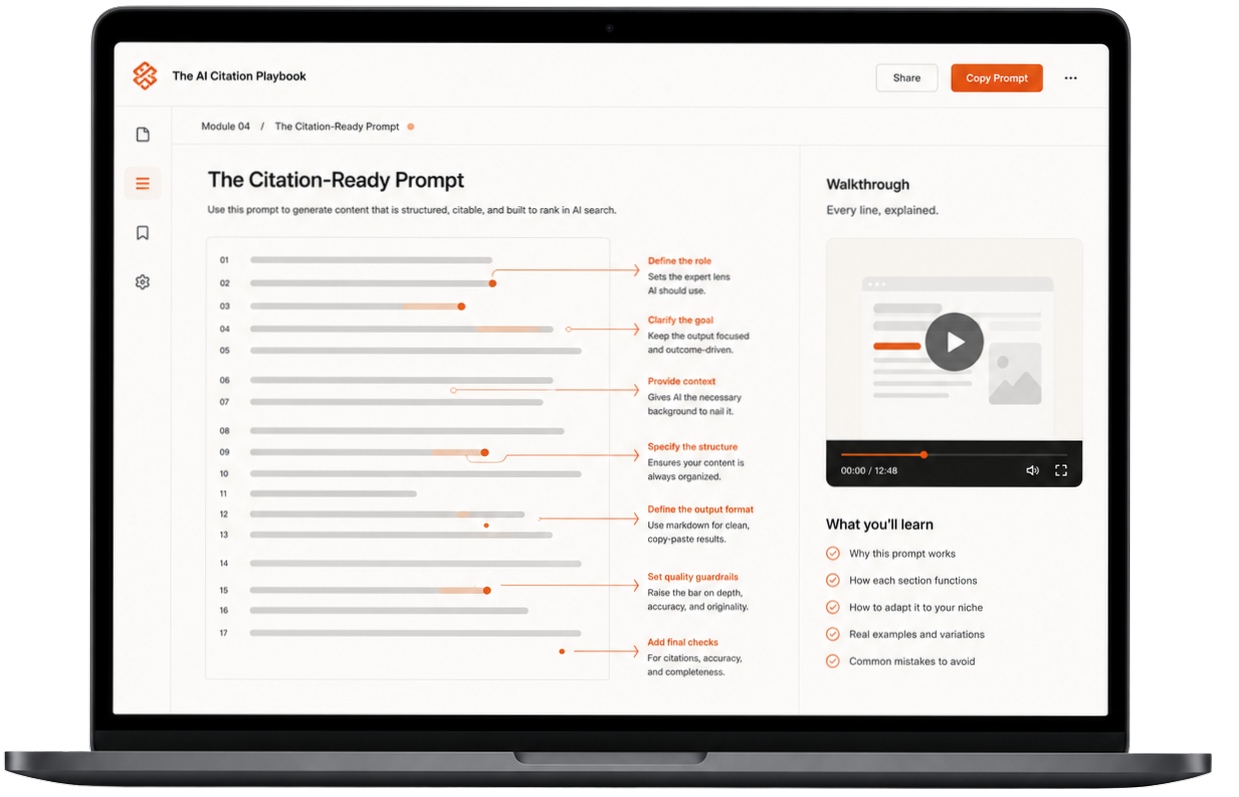
The Citation-Ready Prompt
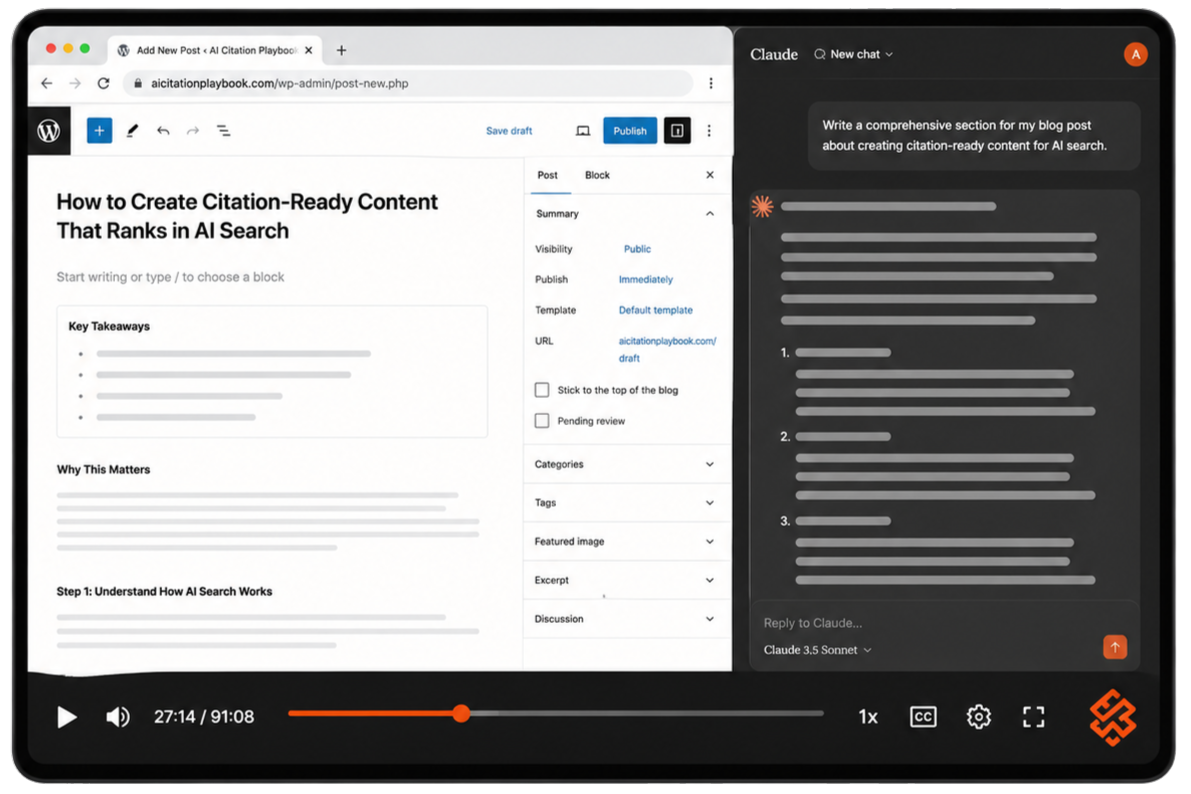
The exact prompt I use, fully written and annotated. Drop it in your workspace, swap in your topic, and it drafts a page built to be the answer, not just another blog post. A video walks through every line so you can tune it to your niche. What used to take me a full day of fiddling now takes a few minutes.
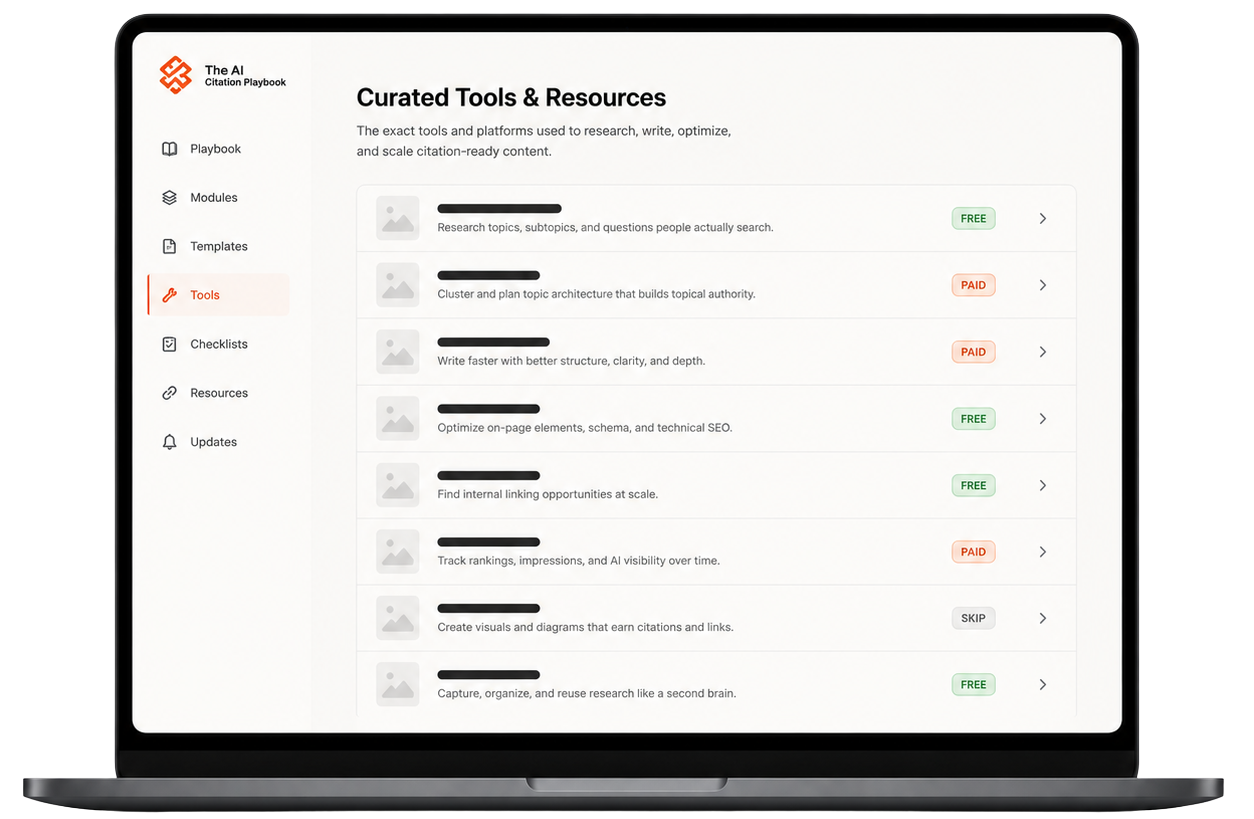
The Operator’s Toolkit
Every tool I actually use, with honest notes on which ones are free, which ones are worth paying for, and which ones to skip. You run the whole system on a near-zero stack and never waste a dollar on software you don't need.
The Live Build Video
A 90-minute screen recording of me building a real page from blank screen to live, talking through every decision as I make it. It's the closest thing to sitting beside me while I work, the kind of over-my-shoulder session people pay a few hundred dollars to watch live. You copy the moves instead of guessing at them.
The Pre-Built Workspaces
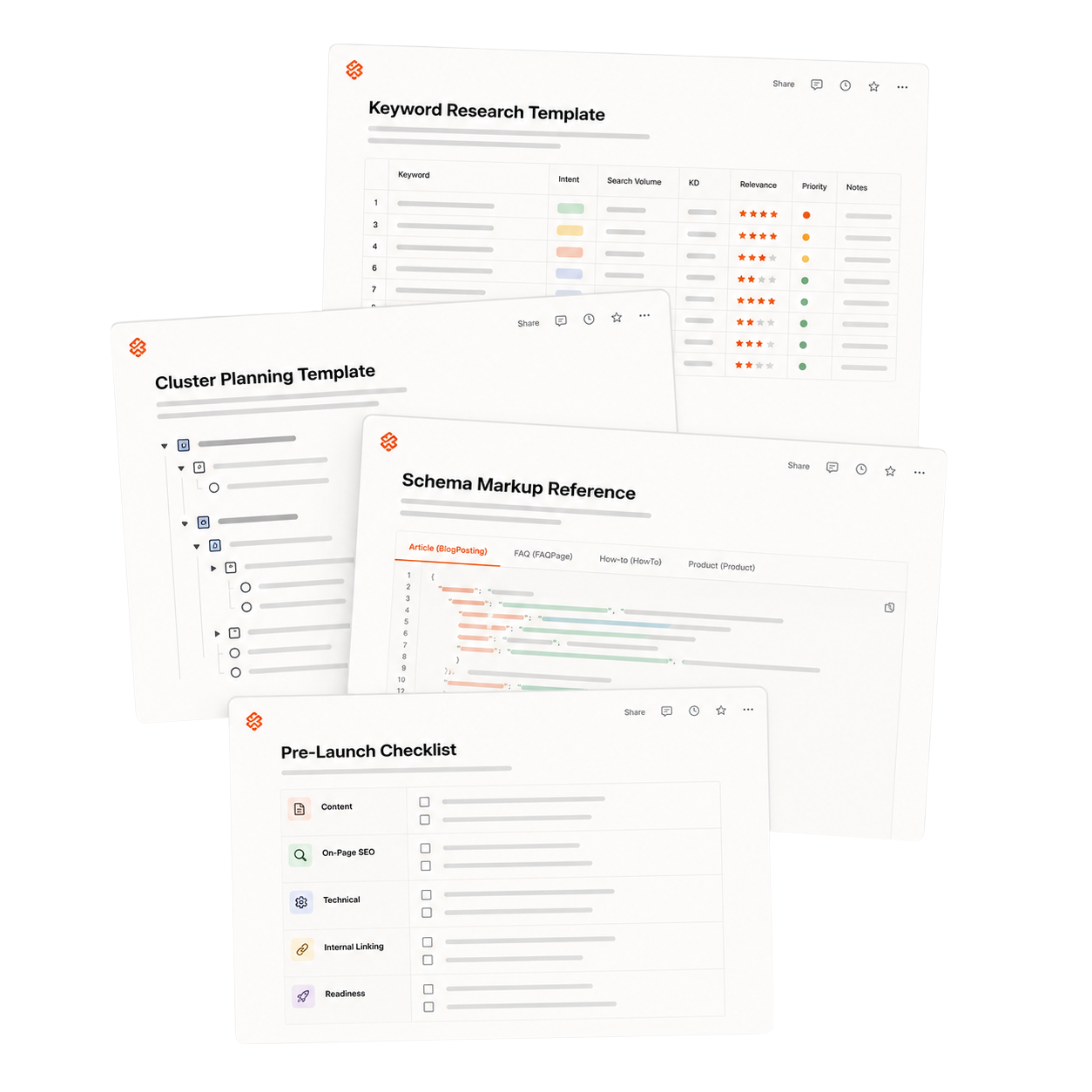
Four ready-to-use templates you copy straight into Notion or Google Docs: buyer-question research, cluster planning, a schema reference, and a pre-launch checklist. The blank-page setup is already done, so you start building on day one instead of losing a week getting organized.
The “If I Had To Start Over” Plan
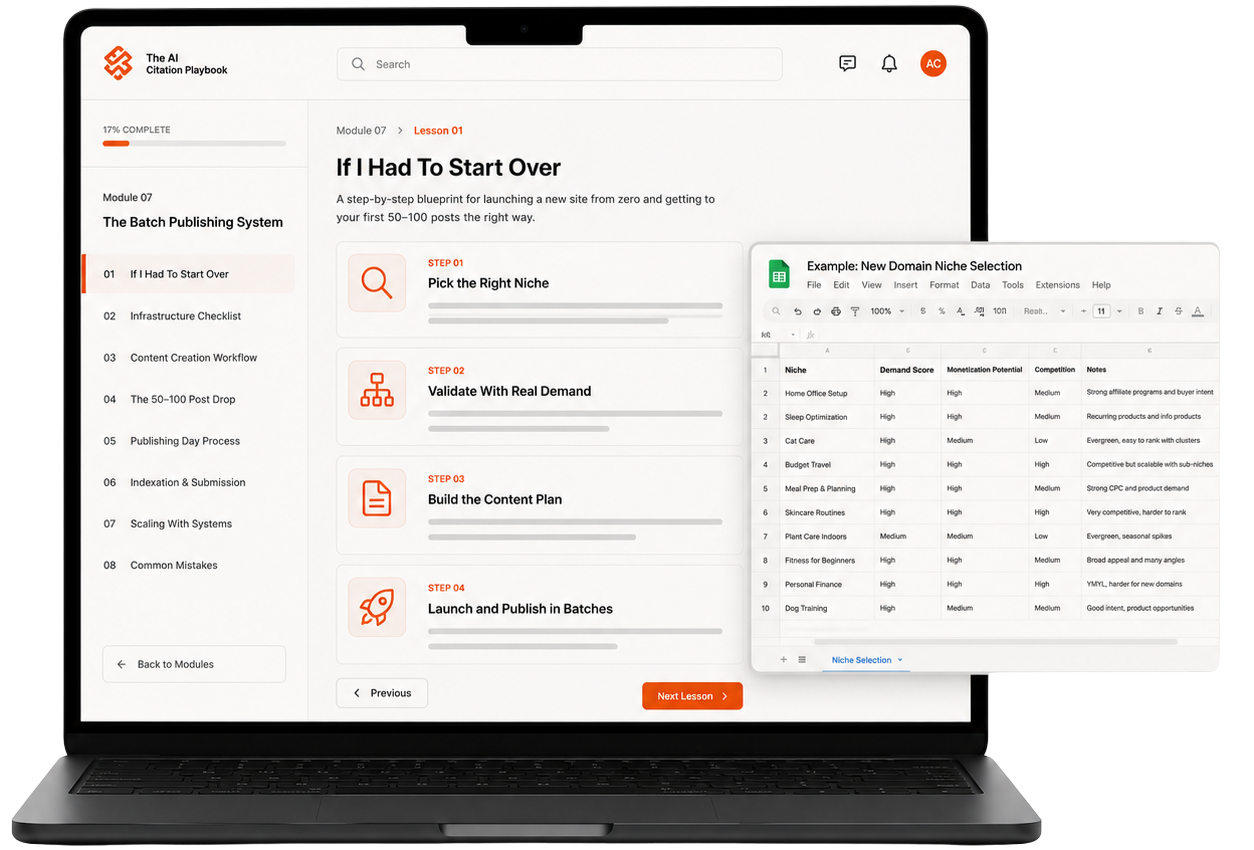
A full module mapping how I'd deploy this on a brand-new niche site today, step by step from first question to launched pages, with examples from a niche I'd never touched. If you're starting cold, this is your exact running order, so you skip every wrong turn I already paid for.
The Community
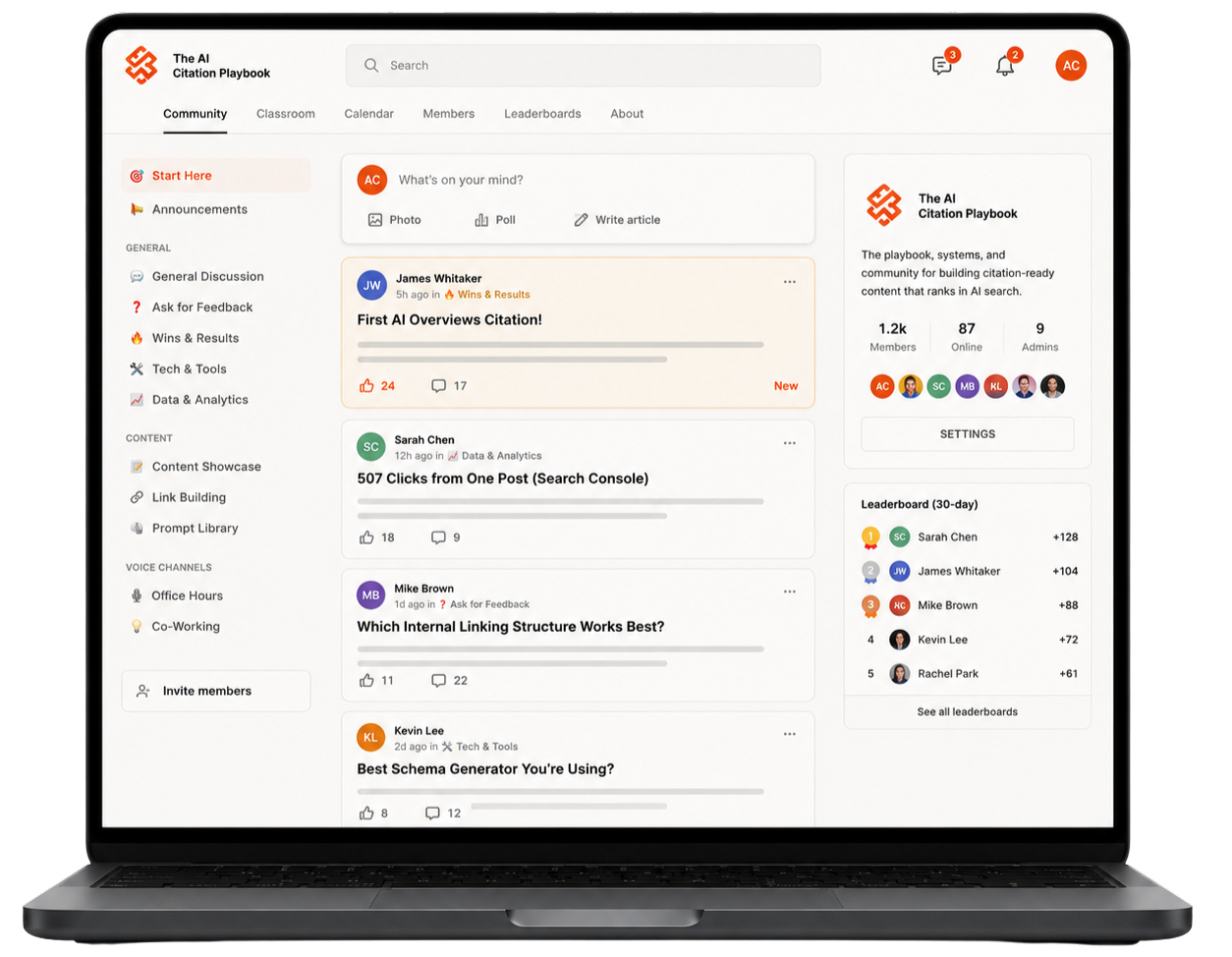
Lifetime access to a private network of business owners building the exact same engine. Share your wins, troubleshoot your clusters with peers, and get direct updates and insights from me as the AI landscape evolves.
Figuring this out on your own is hundreds of hours of trial and error. Paying someone to do it for you runs into the thousands. You get the whole system, tested and working, for $27 one time.
Three ways to get named by AI. Two of them make you pay for the privilege.
Do it yourself and pay in time. Hire it out and pay in retainers. Or take the system that already worked and skip both.
Do it yourself
Free content + your own time
The play
Read every AI-citation post, watch the YouTube explainers, prompt ChatGPT for help, run your own experiments until you figure out what structure works.
The outcome
You can get there. The cluster shape isn't a secret. Most people try, miss two or three structural details, and quit by month three.
The cost
Your time. Hundreds of hours over months. Plus every wrong turn while competitors compound.
Hire it out
Done for you, on retainer
The play
Find an agency that even understands AI citation yet, hand over your site, and trust they know the structure instead of billing you to learn it on your dime.
The outcome
Maybe it lands. Most shops are still selling last decade's playbook, so you're often paying them to work this part out in real time.
The cost
Thousands a month, on retainer, no guarantee. The kind of spend that only makes sense once you already know the system works.
Where to be
The AI Citation Playbook
The system, condensed
The play
Drop in the exact prompt, page structure, and link map I used. Weekend to set up. About two hours a week after that.
The outcome
The same trajectory you saw above. You ride out the slow stretch that makes everyone else quit, then it compounds in your favor.
The cost
$27 one-time.
Same system. 60-day refund. The bet is essentially free.
Fair question: if this works the way I say it does, why is it $27 and not a few hundred?
Two reasons. First, the thing that actually stops people isn't the price, it's never starting. I'd rather make this cheap enough that you have no reason to put it off than gate it behind a number that keeps you exactly where you are.
Second, I'm playing a longer game than this one sale. A few people who run the system and watch it work will want me more involved later on. Most never will, and that's completely fine. The playbook stands on its own either way.
So there's no catch. Pay once, keep it forever, and take the refund if it doesn't deliver. The price is low on purpose. What you do with it is the part that counts.
The honest answers
You’re probably skeptical about three things.
01
“This sounds built for coaches and digital-product folks. Does it actually work for ecommerce, services, local businesses, or something else?”
Yes. AI engines aren't evaluating your business category, they're evaluating whether your pages answer the specific questions your buyers are typing. The same page structure that gets cited for "best gluten-free baking blog" gets cited for "best landscape photography prints under $100," "best wedding photographers in Toronto," "best business coaches for solopreneurs," or "best CRM for solo founders." The one place this doesn't work is pure brand or lifestyle content where there aren't specific buyer questions to answer, but if you sell anything to anyone, somebody is asking AI a question right now whose answer should name you.
02
“Will AI citations actually bring me customers, or is it just vanity?”
Citations don't act like Google clicks. They act like the moment a friend mentions your business to someone who needed it. When my Copilot citations climbed past 100,000, my brand searches climbed with them: people started typing "BakingSubs" directly into Google after AI mentioned us. New customers started telling me they'd asked Claude or ChatGPT a baking question, seen our site named, and gone looking for us. That's the conversion pattern. AI surfaces your name in the moment of buyer intent, the buyer remembers it, and they come find you. Some click through directly from the AI answer. Most look you up afterward, exactly the way they would if a real person had recommended you.
03
“I'm not a coder and I don't have a following. Is this for me?”
AI handles the heavy lifting. You set up the prompt once and it works for every page after that. Setup takes a few days; after that, building and maintaining pages runs about two hours a week. As for authority: you don't need a big following or an email list to start. Authority makes the system work faster, but pages that answer real questions get found either way. If you have a domain and something to sell, you have what the system needs. Everything else is in the playbook.
Read the playbook. Set up the system. Run it on your site.
If you've honestly put the system into practice and the results aren't what I promised, email me within 60 days, show me what you tried, and I'll refund you. No retention call. No “watch this video first.” Just your money back.
One thing to keep in mind: this system compounds hard, but only for the people who actually start.
Every month you wait is a month a competitor gets named in your place. AI engines are picking the businesses they recommend right now, for every category, in every niche. The names being learned in 2026 are the ones AI passes around in 2027. By the time the average business owner notices what's happening, those names will already be set.
Questions
Frequently Asked Questions
How technical do I need to be? Do I need to code?
+
You don't need to be a coder. The system produces blog posts ready to publish. You can drop them into WordPress, Ghost, Squarespace, Shopify, or any platform you already use. If you want to build something custom, the AI you're already using can format the content as HTML or markdown in seconds. The playbook covers the principles for setting up the page structure correctly, which translates to any platform.
How long until I'll see real results?
+
Google traffic takes months. But AI engines pull from live data and update their conversational models much faster. You can see your site start getting recommended in AI answers long before Google rewards you with traditional clicks.
How do I access it after I buy?
+
You get instant access right after checkout. You'll get login details for a course portal that holds the playbook, the prompt, the toolkit, the workspaces, and the live build video. You keep access forever, including any updates I add as I refine the system on my own sites.
Is there a community, coaching, or support?
+
Yes. Every buyer gets free access to a Skool community where you can ask me questions directly and get help applying the system to your niche. I'm active in there, and since we're early, you get more of my attention than you would in a crowded group. There's no paid tier, no upsells, and no required calls. The $27 covers both the playbook and the community access. If you want 1-on-1 coaching, that's a different product you'd buy elsewhere.
What if AI engines change how they cite pages?
+
They will. But the system isn't built around any one engine. It's built on a simple idea: make pages that answer one specific question, structure them so machines can read them easily, and use schema markup so the answer is clearly labeled. That same idea worked for Google for 25 years and it works for AI engines now. The format will change but the idea won't.
One more time
The whole stack, for $27.
✓The AI Citation Playbook
✓The Citation-Ready Prompt
✓The Operator’s Toolkit
✓The Live Build Video
✓The Pre-Built Workspaces
✓The “If I Had To Start Over” Plan
✓The Community
You now stand at a crossroads
↓
Path 1
You close this page. Six months from now, you’re still doing what you’ve always done. Still hoping buyers find you. Still watching competitors you’ve never heard of get named when your buyers ask AI for a recommendation in your category.
The names AI passes around keep getting set. Six months from now, you’ll either be one of them, or you won’t.
Recommended
↓
Path 2
You invest $27 today. Within a few weeks, you have the system running and the first batch of pages live. Six months from now, the same system that turned BakingSubs into one of the names AI passes around will be working on yours, as long as you actually put in the work.
The pages you publish this month will be the names AI engines pass around in 2027. The engines update constantly, and once you own a spot other businesses come for it, so this isn't set-it-and-forget-it, it's a position you take and then hold. The Playbook gives you the exact architecture to get to the top of the AI answers and stay there.